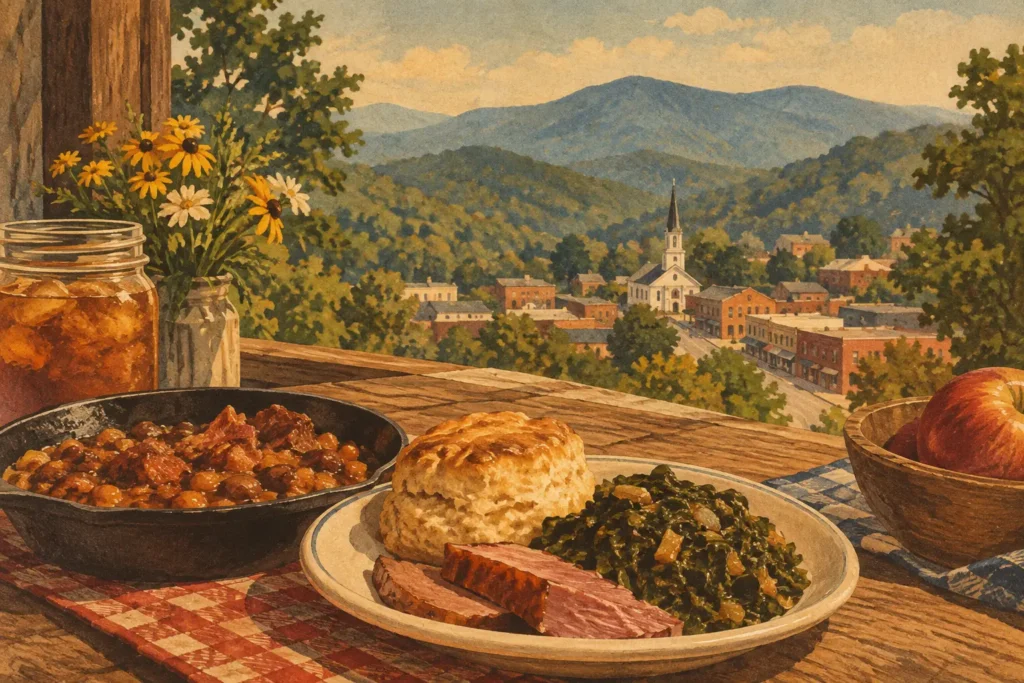
A good bite can tell you where you are, but only if you pause long enough to hear the rest of the story. To find Appalachian food stories in West Jefferson, look beyond the menu description. Ask who made the recipe, notice the building around you, and leave room in the afternoon for the mural down the block, the porch music drifting nearby, and the local conversation that turns a meal into a memory.
West Jefferson is a town that rewards a slower kind of curiosity. Downtown is walkable, welcoming, and full of details that can be easy to miss if lunch is treated as a quick stop between bigger plans. Here, food is often the doorway to the people and places that give the town its character.
Find Appalachian Food Stories by Following the People
The most memorable local food stories usually begin with a person, not a dish. Maybe it is an owner who can explain why a certain ingredient matters to their family, a baker who rises before daylight, or a server who knows which downtown corner has changed the most over the years. Appalachian food is not one fixed menu. It is a living collection of practical know-how, family habits, garden seasons, church suppers, roadside stands, and new ideas carried forward by people who care about where they live.
That means the best question may not be, “What is your most popular item?” Try, “What should I know about this?” or “Is there a local story behind it?” The answer might lead to a family recipe, a regional ingredient, or a tale about how a small business found its home in West Jefferson.
There is a trade-off here. Not every busy lunch rush is the right time for a long conversation, and nobody expects visitors to interrogate the person carrying a tray of sandwiches. A little good timing goes a long way. Ask when the room settles down, be genuinely interested, and let the conversation take the shape it wants to take.
Listen for the everyday details
Big historic moments matter, but everyday details are often where a place feels most real. Notice the language people use for foods, the side dishes that appear without fanfare, and the recipes that sound simple until someone explains the patience behind them. A plate can carry stories of thrift, celebration, hard work, and hospitality all at once.
The point is not to decide whether one dish is more “authentic” than another. Communities change. Cooks experiment. A downtown restaurant can honor Appalachian roots while serving something unexpected, and that is part of the story too. The better question is whether the food tells you something honest about the person and place behind it.
Look Up Between Bites
In West Jefferson, the next clue is often above eye level. Downtown buildings, painted walls, old storefronts, and tucked-away architectural details create a setting that is much more interesting than a row of places to eat. They give context to the meal in your hand.
Take the Old Hotel. Its name alone invites questions. Who came through its doors when downtown was a different kind of crossroads? What conversations might its walls have overheard? Buildings do not need to be frozen in time to be meaningful. Sometimes the pleasure is in recognizing that a familiar-looking brick facade has outlasted generations of changing businesses, visitors, and local routines.
You do not need a history lecture at every corner. Just give yourself permission to wonder. That curiosity changes the pace of a visit. Instead of moving from restaurant to restaurant, you begin to see how food, commerce, travel, and community have shared the same few blocks for a long time.
Let the murals introduce the neighborhood
West Jefferson’s murals add another layer to the downtown story. They are not decoration pasted onto a generic Main Street. They help visitors notice the local imagination at work and invite a closer look at the artists, scenes, and subjects represented around town.
After a tasting or a coffee, take a few unhurried minutes with a mural. Consider what it celebrates. Is it looking toward mountain landscapes, local labor, music, memory, or a bit of playfulness? Public art gives a town a way to speak in plain sight, and it can lead naturally to conversations about the people who keep West Jefferson colorful.
For families and friend groups, this is also an easy way to make an afternoon feel shared rather than scheduled. Someone spots a detail. Someone else takes a photo. A child notices the funny part first. Before long, everybody has a favorite wall, window, or street corner.
Follow the Sounds of West Jefferson
Food stories are not only tasted and told. Sometimes they are heard. Music has long been part of Appalachian life, from front porches and community gatherings to stages and informal pickin’ sessions. In and around West Jefferson, music can give a visit its rhythm, whether you catch a planned performance or simply hear the town feeling lively.
It is worth paying attention to how music and food belong together. Both create a reason to gather. Both can be handed down, reinterpreted, and shared with strangers. A familiar tune and a generous plate have something in common: they make room at the table, even when there is no actual table involved.
Check what is happening downtown, but leave space for chance too. The most charming moments are not always printed on an itinerary. A conversation outside a shop, a musician setting up, or a group lingering after a meal can be the small scene you remember on the drive home.
How to Find Appalachian Food Stories Without Rushing Them
A little structure helps, especially if you are visiting for only a day. Start downtown and plan to walk, rather than trying to collect as many stops as possible. Choose a meal or tasting that interests you, then build in time before and after it to notice the blocks around you. Pop into independent shops. Read signs. Look at the older buildings. Follow the art.
If you prefer a guided introduction, High Country Food Tours brings food, history, murals, and local personality together in one walk through downtown. That can be especially helpful on a first visit, when you want the stories behind the stops instead of guessing which doors hold the good ones. A guide can point out the details that make West Jefferson feel like West Jefferson, not just another pretty mountain town.
Still, a guided experience is not the only right way to explore. Some visitors love a little framework and then want to wander. Others are happiest making discoveries entirely on their own. It depends on your travel style, your group, and how much time you have. Either way, the goal is not to race through a checklist of Appalachian flavors.
Bring Home More Than a Recommendation
The best food stories travel well, though not always in a takeout box. You may leave thinking about a recipe, an artist’s work, a local business owner’s unexpected career path, or the way the Old Hotel made you curious about an earlier West Jefferson. Those details are the souvenirs that keep a place from blurring into the rest of a road trip.
Before you go, consider returning to one spot that caught your attention. Order the thing you almost chose the first time. Step back to look at the mural again. Ask one more question. West Jefferson has a way of making a second look worthwhile, and sometimes the story you came to find is waiting just around the next corner.