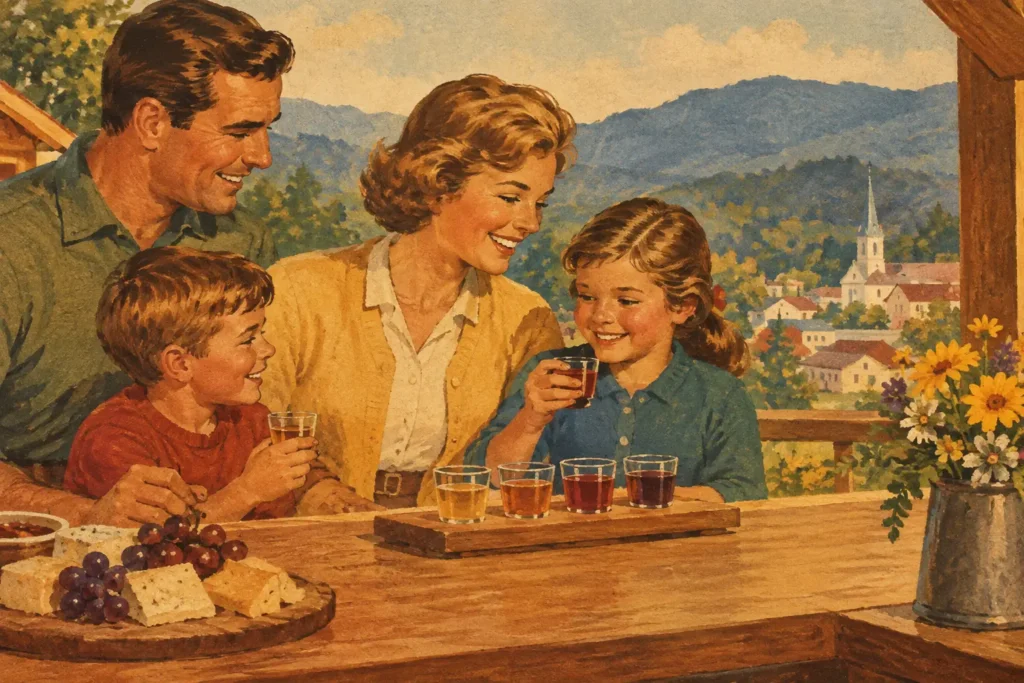
A child notices things adults walk right past: a painted bear on a wall, the creak of an old floorboard, the smell drifting from a bakery door. That is what makes family friendly tasting activities in West Jefferson more interesting than a simple meal out. A few bites can become a reason to ask who made them, why a building has that odd little detail above its window, or what might be waiting around the next corner.
West Jefferson is especially good at this kind of wandering. Downtown is compact enough for different generations to move at an easy pace, but it is full of small details that reward curiosity. Food gets everyone started. The town does the rest.
Start With a Taste, Then Follow the Story
The most memorable family outings rarely begin with a lengthy history lesson. They begin with something tangible: a warm pastry, a scoop of something sweet, a crunchy bite with a local name. Tasting gives children a job. They can compare flavors, pick a favorite, describe a texture, or decide whether a food is familiar or completely new.
For adults, those same tastes open a different door. A local menu item may lead to a conversation about an independent business, a family recipe, the farms and makers of the High Country, or the person behind the counter who knows half the town. That is the pleasant trick of a good tasting stop. Nobody has to choose between lunch and learning something real about where they are.
Keep the expectations simple. You do not need a formal tasting vocabulary, and nobody needs to like every bite. The fun is in trying, noticing, and sharing opinions. One person may be sold on a savory sample while another is still talking about dessert. Both are useful clues for where the family might want to return later.
Let Downtown West Jefferson Set the Pace
A family-friendly afternoon should have room to pause. West Jefferson is not a place best experienced by racing from one reservation to the next with a snack in hand. Between tastes, look up at the brickwork, peer into shop windows, and give everyone a minute to take in the downtown rhythm.
The Old Hotel is a particularly good place to slow down and wonder. Historic buildings have a way of making children ask the question adults should ask more often: “What happened here?” You do not have to know every answer on the spot. The point is to see the building as more than a backdrop. It is part of the town’s long memory, standing right there among today’s storefronts and conversations.
That small shift changes a walk. Instead of saying, “Here is an old building,” try asking what guests might have seen when they arrived in town years ago. What did they carry? Where did they eat? What stories were traded in the lobby? A bit of imagination makes local history feel close enough to touch.
Build in Looking Time
Families often enjoy an outing more when it includes little pockets of unscheduled time. After a tasting, step outside before deciding on the next stop. Let younger visitors point out what catches their eye. Let grandparents share a memory sparked by an old sign or a storefront that reminds them of another mountain town.
This is also where West Jefferson’s public art earns its keep. Murals offer an easy, no-pressure way to bring everyone into the conversation. Ask each person to choose one detail they would have missed at first glance. Colors, animals, musical references, mountains, and faces can all become a tiny scavenger hunt without turning the day into homework.
Make Tasting Activities Work for Different Ages
“Family friendly” does not mean every family wants the same thing. A couple traveling with a toddler will need a different rhythm than grandparents visiting with school-age grandchildren or parents exploring with teenagers. The best plan leaves room for those differences.
For younger children, keep stops short and sensory. A smell, a sample, a colorful mural, and a chance to stretch their legs may be plenty. Bring water and do not schedule too tightly around nap time. It sounds ordinary, but an unhurried child is much more likely to remember the fun of trying a new flavor.
School-age children are often ready to become unofficial town detectives. Give them a few missions: spot the oldest-looking building, find an artwork with the most colors, or ask a food maker what their favorite item is. These are small invitations to participate, not quizzes. They help children feel like they are discovering West Jefferson rather than being dragged through it.
Teenagers may enjoy the independence of having a real opinion. Let them choose a taste they would like to try or photograph a mural detail that tells a story. They may be more interested in the personality of a shop owner, a surprising piece of town lore, or the way art and music show up downtown than they let on. That is fine. Curiosity does not always announce itself loudly.
For older adults, seating, walking distance, and a relaxed pace matter more than checking every possible box. A thoughtful tasting day has natural rests. The goal is not to cover every block. It is to leave with a few good stories and enough appetite for another visit.
Taste With a Little Local Curiosity
The strongest tasting activities give food context. When you sample something, ask a question that reaches beyond whether it is good. Who made it? Is there a local connection in the ingredients, the recipe, or the business itself? Has the owner been part of downtown for years, or are they bringing a fresh idea to an old storefront?
These questions matter because independent businesses are not interchangeable. In a small town, a café, bakery, or restaurant may also be a gathering place, a source of neighborhood news, or the location of a story that locals still tell. The person serving a bite may be part of what makes the bite worth remembering.
Music belongs in this picture, too. West Jefferson has the kind of downtown where music can feel less like an attraction added for visitors and more like part of the local pulse. Notice a poster in a window, a musician’s name on a wall, or a conversation about an upcoming gathering. Food, art, and music often cross paths in small towns because the same people are helping make all three happen.
That is the real advantage of tasting your way through downtown rather than treating food as a quick pit stop. You begin to recognize connections. A mural leads to an artist’s name. An old building raises a question about the town’s past. A local flavor leads to the people making a living here now.
Consider a Guided Walk When You Want More Than a Menu
It is entirely possible to create your own family tasting afternoon, especially if you enjoy following your nose and letting the day unfold. But a guided experience can be a good fit when you want the stories alongside the samples, without spending the morning figuring out where to begin.
High Country Food Tours approaches food as the doorway to West Jefferson, not the whole destination. A small walking group can make it easier to hear the details behind downtown places, meet local personalities, and notice history and art that might otherwise stay hidden in plain sight. Before choosing any guided outing, it is wise to check the current walking pace, tasting options, and whether the experience suits the ages and dietary needs in your group.
That bit of planning is not fussy. It simply lets everyone relax once the walk begins. The best family experiences have enough structure to make things easy and enough breathing room for a spontaneous question, an extra look at a mural, or a second bite of the thing nobody expected to love.
Leave Room for One More Corner
A successful tasting day in West Jefferson does not end when the last sample is gone. It might end with a favorite mural still on someone’s mind, a story about the Old Hotel being retold in the car, or a plan to return to a shop tomorrow. Let that be enough. In a town built from people, places, and small surprises, one more corner is often where the next story begins.